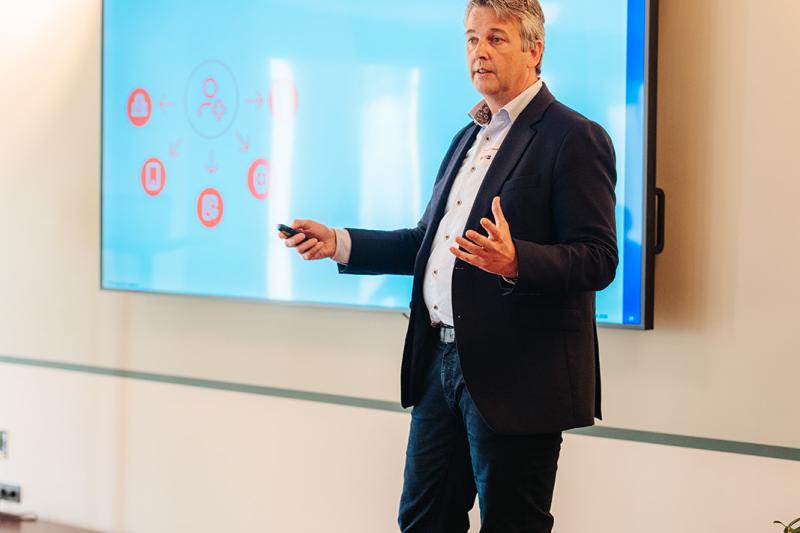

Wim De Waele, chairman of Voka East Flanders, opens the debate in our magazine.
I grew up in a Flanders characterized by stagflation and industrial decline after the major oil shocks of 1973 and 1979. Some of my friends ended up in youth unemployment which hovered at 20% at the time. As a rebellious student, I defiantly wore a 'No Future' badge on my leather jacket, but then decided against all odds to start university. Hoping there might still be a future to be made in this miserable economy.
Geopolitically, things didn't look much better. In 1979, NATO decided to install cruise missiles in Western Europe and Ronald Reagan stepped up the fight against the communist 'Empire of Evil'. The Sowiet Union then imploded surprisingly quickly, culminating in the fall of the Berlin Wall in 1989. Francis Fukuyama wrote The End of History at that time, in which he argued that the liberal, democratic world order would naturally become the global standard. Which for many, including me, was a guiding principle throughout the following decades.
A strong independent defensive capability is our best guarantee to maintain our European model. This not only offers economic opportunities for our companies, but it is also our moral duty as citizens and entrepreneurs to contribute to this."
Wim De Waele, voorzitter Voka Oost-Vlaanderen
In the past forty years, the percentage of the world's population below the poverty line has fallen from 50 to 10 percent, with most economies progressing, some spectacularly, not to name China. But the combination of Russia's failure to grow closer to Europe, China's autocratic turn and recent political evolutions in the United States were not in the plan. I worked for US companies for about twenty years, lived there in the nineties and admired their dynamic and open society, especially in Silicon Valley which was the ultimate example of a meritocracy to me at that time.
But I can only conclude with regret that the ruling class in the US has been ignoring the growing income gap as a result of globalization for far too long which has led to an extremely polarized society. And that the tech brothers in their current incarnation are strikingly similar to the famous Robber Barons from the Gilded Age (ca. 1870-1900): powerful American industrialists who amassed enormous fortunes through ruthless monopolies and exploitation of labor.
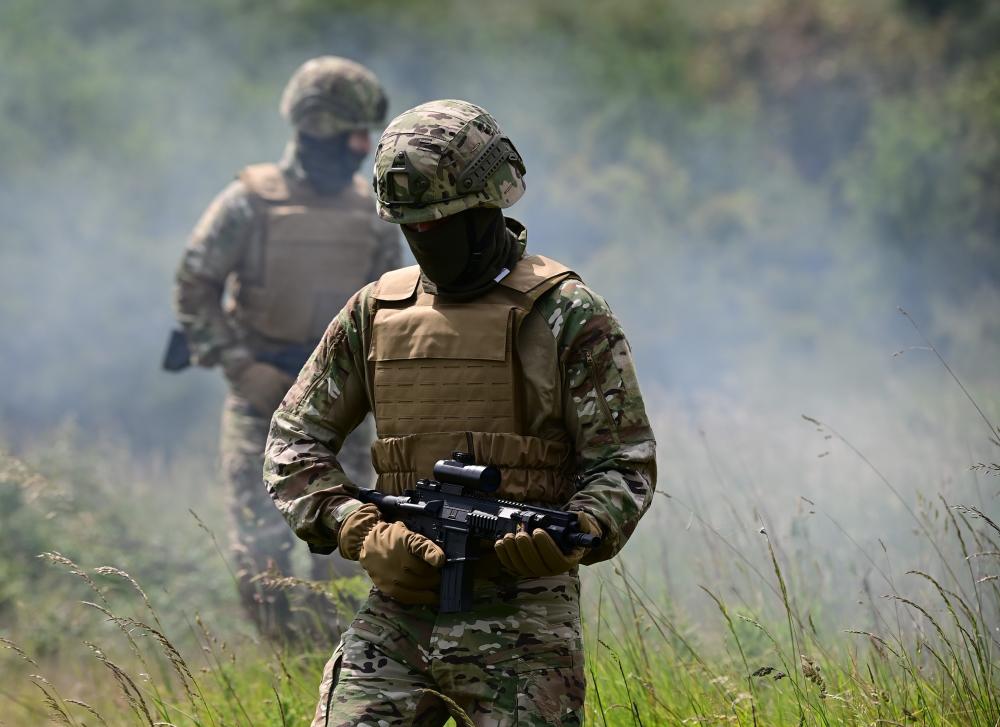
For sure Europe is not perfect. But there is still a lot to stand up for. And in doing so, we seem to on our own. For a long time, I went along with the story that global trade and multilateral consultation would make conflicts unnecessary. But only idiots never change their opinion. To be honest, it felt a bit awkward when our Minister of Defence recently visited our tech innovation hub with the general staff of our army. Two worlds starting a dialogue that had never even met before.
But the content of their presentations and discussions was strong and convincing. A strong independent defensive capability is our best guarantee to maintain our European model. This not only offers economic opportunities for our companies, but it is also our moral duty as citizens and entrepreneurs to contribute to this. We owe it to the new generations to continue to fight for a safe and prosperous democratic Europe. That the tide can turn has been demonstrated many times in history, there is no reason why this cannot also be the case this time.